

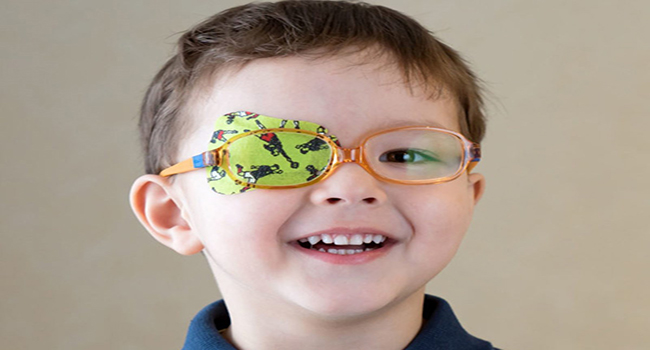
Amblyopia (Lazy Eye) is a neurodevelopmental visual disorder that typically develops during infancy or early childhood. It is characterized by reduced visual acuity in one eye, while the other eye maintains clearer vision.
If left untreated, the brain gradually suppresses the input from the weaker eye and relies more on the stronger eye. Over time, this imbalance can lead to permanent visual impairment in the affected eye, even with corrective lenses. Amblyopia is one of the leading causes of vision loss in children and may also impact learning, visual development, and quality of life.
Risk Factors
Children at higher risk include those with a family history of eye disorders, premature birth, low birth weight, or developmental delays.
Common Causes
Amblyopia may result from:
• Refractive errors (myopia, hyperopia, astigmatism)
• Strabismus (ocular misalignment)
• Structural eye abnormalities such as cataract, ptosis, or corneal scarring

Signs and Symptoms
Because amblyopia is often asymptomatic, it is usually detected during routine eye examinations. Possible signs include:
• Frequent bumping into objects on one side
• Covering one eye during visual tasks
• Head tilting
• Reduced depth perception and difficulty with 3D vision
Management
Early detection and treatment are essential. One of the commonly used approaches is Vision Therapy, a non-surgical, individualized treatment aimed at improving coordination between the brain and the visual system.

Vision therapy includes structured visual exercises designed to enhance eye teaming, focusing ability, tracking, and visual processing. It is used in conditions such as amblyopia, strabismus, convergence insufficiency, and binocular vision disorders, and may support improvements in reading, attention, and visual performance.
Clinical Note
Vision therapy programs are typically customized by optometrists based on patient needs and may involve tools such as lenses, prisms, filters, and computerized visual training systems. Regular home-based exercises are often recommended to support clinical outcomes.