Amblyopia is a neurodevelopmental disorder of the visual cortex that reduces vision in one or both eyes despite optical correction and absence of any pathological cause. It occurs along the retino-geniculo-cortical pathway [1] and can be unilateral or bilateral [1,2].
An epidemiological study in Iran (2014) involving 3,547 students across 7 provinces reported a prevalence of 1.88% [3]. Amblyopia may present with binocular vision deficits, strabismus, and oculomotor disorders [3–5]. Bilateral amblyopia is less common than unilateral; in bilateral cases both eyes have reduced acuity, while in unilateral amblyopia one eye is amblyopic and the fellow eye has sound vision.
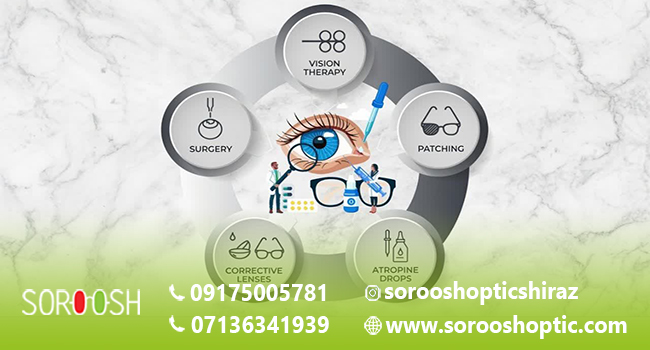
Conventional treatments include patching (occlusion) and atropine eye drops. However, challenges such as poor child compliance, long treatment duration, incomplete acuity recovery, monotonous therapy, and reduced self-confidence often lead to failure, especially in school‑aged children [6–8].
Amblyopia develops during the critical period of visual development. Abnormal visual experience alters neural pathways from the retina to the visual cortex. The amblyopic eye receives fewer visual signals because the brain suppresses its input [9,10]. Normal binocular vision and depth perception requires active participation of both eyes. Any disruption reduces binocular function.
Common causes of amblyopia
· Strabismus (most common): misaligned eyes (esotropia or exotropia) leading to amblyopia [11,12].
· Anisometropia or high refractive error: significant interocular difference (often hyperopia, sometimes myopia or astigmatism) can cause unilateral or bilateral amblyopia [13].
· Other ocular pathologies: e.g., congenital cataract or ptosis that obstructs clear image formation; requires urgent treatment in infancy to prevent permanent vision loss [14,15].
Treatment
The first step is to achieve the best correction visual acuity in each eye, [16,17].
Basic measures
When the cause is cataract or severe ptosis, the obstruction must be removed first [18], followed by accurate refractive correction. Then treatments such as patching, atropine, or the modern approach, vision therapy, can begin. If vision therapy is available, it is preferred; otherwise patching or atropine is considered.
Patching and atropine
Patching forces use of the amblyopic eye by covering the sound eye [19]. Atropine blurs the sound eye to encourage use of the amblyopic eye for near or distance vision; it is indicated patching has poorly tolerated, or has risk of occlusion induced amblyopia in the sound eye [20,21].
Vision therapy (optometric vision therapy)
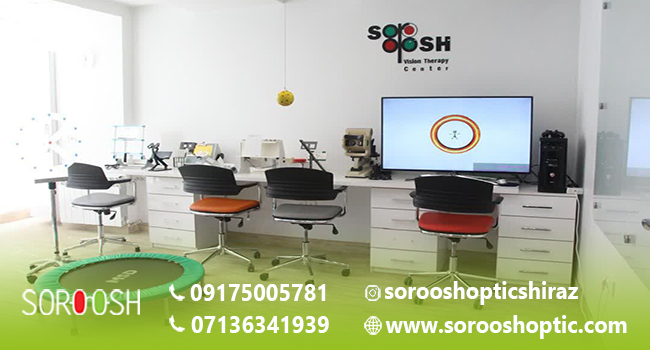
A sensory‑neural‑visual training approach that enhances visual system performance, visual information processing, and visual rehabilitation. It includes perceptual training, dichoptic therapy, video games, digital therapy, monocular/binocular exercises, virtual reality, and orthoptic procedures [22]. Exercises can be performed in‑office or at home. They are based on monocular field in binocular field . Accommodation, fusional vergence, oculomotor skills, hand‑eye coordination, eye‑body coordination, attention, and concentration are trained using digital and non‑digital tools. Therapy is supervised by an optometrist experts in vision therapy.
This article reviews the rationale and latest research on using vision therapy in amblyopia management.
Why vision therapy? Neural mechanism
· a) Neuroplasticity: Appropriate targeted stimulation can facilitate formation of new neural networks in the visual cortex and accelerate recovery [23].
· b) Hebbian theory: Strong, synchronous activation of neural populations increases synaptic strength, supporting sensorimotor network plasticity and visual function improvement [23].
· c) fMRI studies: During visual stimulation of the amblyopic eye, brain activity changes; Brodmann areas (BA) in both temporal lobes show significant activation, suggesting that targeted therapies can improve vision [2,23].
Is amblyopia just reduced acuity?
No. Children with amblyopia also suffer from reduced stereopsis, reduced contrast sensitivity (edge detection and figure‑ground discrimination), impaired pursuit and saccadic eye movements (affecting reading speed and accuracy), and accommodative dysfunction (focusing from distance to near and vice versa) [1,2]. Thus it is simplistic to define treatment success endpoint solely by visual acuity gain! Full treatment should normalise acuity, stereopsis, accommodation, and oculomotor functions. Furthermore, children with amblyopia often face learning and reading fluency problems, which vision therapy may also address.
Does patching alone improve all these deficits?
Patching has long been the standard but sometimes fails to achieve full recovery. Moreover, patching is primarily monocular and can itself disrupt binocular vision [4]. Many parents worry that patching the sound eye might weaken it. These concerns have driven interest in newer binocular treatments.
Studies show that despite patching, 51.6% of amblyopic children do not improve beyond 20/30–20/40 (6/9–6/12) [24]. In a PEDIG study of bilateral amblyopia after one year of patching, 13% still had vision below 20/40 in one eye and 34% below 20/40 in both eyes [25].
These challenges led to the introduction of active vision therapy technologies.
Solution
Since 2013, researchers have investigated vision therapy techniques, aiming to improve each visual acuity to achieve efficient binocular vision. Instead of patching, binocular vision exercises (vision therapy) are used. This approach reduces the need for occlusion, provides appropriate stimulation to the amblyopic eye, and engages children with motivating exercises, improving cooperation. In‑office control allows better management of behaviour than home‑based patching.
Results
Groups receiving binocular interventions showed better final acuity [26]. A 2021 Iranian study (Rajavi et al.) using virtual reality exercises improved amblyopic eye acuity by 2–3 lines [27].
Another study assumed that patching fails to improve stereopsis in 70% of cases; they enrolled 32 children aged 7–14 years who had not achieved good stereoacuity with patching. Vision therapy produced a significant increase in stereoacuity, with a mean improvement of 46.42% compared to patching, and results remained stable after six months [28]. In another study of 7–10‑year‑olds, stereoacuity improved by 55.26% [2].
Stereopsis is the highest level of binocular vision. Vision therapy using liquid‑crystal shutter glasses (each lens switches on/off 60 times per second) synchronised with a digital display containing visual stimuli minimises the brain’s suppression of the amblyopic eye. Continuous cortical stimulation likely promotes new neural networks and improves visual quality. Because the presented stimuli incorporate stereo cues, this training effectively enhances depth perception, as studies confirm.
During therapy, the therapist modulates contrast (fading/intensifying images) to stimulate parvocellular and magnocellular pathways, thereby improving contrast sensitivity. Studies have shown that three months of using specialised glasses in vision therapy significantly increases contrast sensitivity in amblyopic children [29]. Perceptual learning also improves contrast sensitivity [30]. Dichoptic stimuli with varying contrasts can increase grey matter and repeatedly activate magno‑ and parvocellular pathways [31]. Even the contrast sensitivity of the fellow eye in amblyopes is subnormal, indicating abnormal binocular interaction [32].
Based on neuroplasticity, repeated visual training likely induces functional changes in visual pathways, increasing synaptic strength. These neuroplastic changes in sensorimotor‑neural networks contribute to improved acuity, stereopsis, and contrast sensitivity [23].
Recurrence risk
The ATS 2C study (2004) found that one‑quarter of patients experienced recurrence within one year after stopping patching [33]. In contrast, vision therapy with maintenance programs reduces this risk considerably [34].
For specialised evaluation of visual function problems (amblyopia, binocular vision disorders, or vision therapy), consultation and appointments are available at Soroosh Vision Therapy Clinic (Shiraz, Iran).
References
1. Lin PW, Chang HW, Lai IC, Teng MC. Visual outcomes after spectacles treatment in children with bilateral high refractive amblyopia. Clin Exp Optom. 2016;99(6):550–4.
2. Huang Y-T, Lin H-J, Liao W-L, Tsai Y-Y, Hsieh Y-C. Effects of Vision Therapy on Bilateral Amblyopia Unresponsive to Conventional Treatment: A Retrospective Comparative Study. Children. 2022;9(2):205.
3. Hashemi H, Yekta A, Jafarzadehpur E, Nirouzad F, Ostadimoghaddam H, Eshrati B, et al. The prevalence of amblyopia in 7-year-old schoolchildren in Iran. Strabismus. 2014;22(4):152–7.
4. Pineles SL, Aakalu VK, Hutchinson AK, Galvin JA, Heidary G, Binenbaum G, et al. Binocular Treatment of Amblyopia: A Report by the American Academy of Ophthalmology. Ophthalmology. 2020;127(2):261–72.
5. Gao TY, Guo CX, Babu RJ, Black JM, Bobier WR, Chakraborty A, et al. Effectiveness of a Binocular Video Game vs Placebo Video Game for Improving Visual Functions in Older Children, Teenagers, and Adults With Amblyopia: A Randomized Clinical Trial. JAMA Ophthalmol. 2018;136(2):172–81.
6. Monga S, Goel N. Clinical Trials in Amblyopia. Handbook of Clinical Trials in Ophthalmology. 2021:328.
7. Hess RF, Thompson B. Amblyopia and the binocular approach to its therapy. Vision Res. 2015;114:4–16.
8. Levi DM. Rethinking amblyopia 2020. Vision research. 2020;176:118–29.
9. Magramm I. Amblyopia: etiology, detection, and treatment. Pediatrics in Review. 1992;13(1):7–14.
10. Birch EE, Kelly KR, Wang J. Recent advances in screening and treatment for amblyopia. Ophthalmology and Therapy. 2021;10(4):815–30.
11. Granet DB, Khayali S. Amblyopia and strabismus. Pediatric Annals. 2011;40(2):89–94.
12. Bosque LE, Yamarino CR, Salcedo N, Schneier AJ, Gold RS, Blumenfeld LC, et al. Evaluation of the blinq vision scanner for detection of amblyopia and strabismus. Journal of American Association for Pediatric Ophthalmology and Strabismus. 2021;25(4):214. e1–. e7.
13. Taylor K, Powell C, Hatt SR, Stewart C. Interventions for unilateral and bilateral refractive amblyopia. Cochrane Database of Systematic Reviews. 2012(4).
14. Chuka-Okosa C. Amblyopia: types, presentation and treatment–A Review. Nigerian Journal of Ophthalmology. 2003;11(2):54–62.
15. Kaur S, Sharda S, Aggarwal H, Dadeya S. Comprehensive review of amblyopia: Types and management. Indian Journal of Ophthalmology. 2023;71(7):2677–86.
16. Group PEDI. Two-year follow-up of a 6-month randomized trial of atropine vs patching for treatment of moderate amblyopia in children. Archives of ophthalmology. 2005;123(2):149–57.
17. Sen S, Singh P, Saxena R. Management of amblyopia in pediatric patients: Current insights. Eye. 2022;36(1):44–56.
18. Asper L, Watt K, Khuu S. Optical treatment of amblyopia: a systematic review and meta‐analysis. Clinical and Experimental Optometry. 2018;101(4):431–42.
19. Rajavi Z, Sabbaghi H, Sharifi EA, Behradfar N, Kheiri B. Comparison between patching and interactive binocular treatment in amblyopia: A randomized clinical trial. Journal of current ophthalmology. 2019;31(4):426–31.
20. Stewart CE, Moseley MJ, Stephens DA, Fielder AR. Treatment dose-response in amblyopia therapy: the Monitored Occlusion Treatment of Amblyopia Study (MOTAS). Investigative ophthalmology & visual science. 2004;45(9):3048–54.
21. Mehmed B, Fronius M, Pohl T, Ackermann H, Schramm C, Spieth B, et al. Electronically monitored occlusion therapy in amblyopia with eccentric fixation. Graefe’s archive for clinical and experimental ophthalmology. 2022:1–13.
22. Hernández-Rodríguez CJ, Piñero DP. Active Vision Therapy for Anisometropic Amblyopia in Children: A Systematic Review. J Ophthalmol. 2020;2020:4282316.
23. Zhai J, Chen M, Liu L, Zhao X, Zhang H, Luo X, et al. Perceptual learning treatment in patients with anisometropic amblyopia: a neuroimaging study. British Journal of Ophthalmology. 2013;97(11):1420–4.
24. Kirandi EU, Akar S, Gokyigit B, Onmez FEA, Oto S. Risk factors for treatment failure and recurrence of anisometropic amblyopia. International ophthalmology. 2017;37:835–42.
25. Klimek DL, Cruz OA, Scott WE, Davitt BV. Isoametropic amblyopia due to high hyperopia in children. Journal of American Association for Pediatric Ophthalmology and Strabismus. 2004;8(4):310–3.
26. Foss AJ, Gregson RM, MacKeith D, Herbison N, Ash IM, Cobb SV, et al. Evaluation and development of a novel binocular treatment (I-BiT™) system using video clips and interactive games to improve vision in children with amblyopia (‘lazy eye’): study protocol for a randomised controlled trial. Trials. 2013;14:145.
27. Rajavi Z, Soltani A, Vakili A, Sabbaghi H, Behradfar N, Kheiri B, et al. Virtual Reality Game Playing in Amblyopia Therapy: A Randomized Clinical Trial. J Pediatr Ophthalmol Strabismus. 2021;58(3):154–60.
28. Sharma S, Sharma P, Singh P, Ganesh S. Eccentric Fixation in Mixed Amblyopia: A challenge in Treating Successfully. J Opto Ophth. 2022;3(1):1–4.
29. Levi DM, Knill DC, Bavelier D. Stereopsis and amblyopia: A mini-review. Vision research. 2015;114:17–30.
30. Barollo M, Contemori G, Battaglini L, Pavan A, Casco C. Perceptual learning improves contrast sensitivity, visual acuity, and foveal crowding in amblyopia. Restorative neurology and neuroscience. 2017;35(5):483–96.
31. Liu C-S, Bryan R, Miki A, Woo J, Liu G, Elliott M. Magnocellular and parvocellular visual pathways have different blood oxygen level–dependent signal time courses in human primary visual cortex. American Journal of Neuroradiology. 2006;27(8):1628–34.
32. Chatzistefanou KI, Theodossiadis GP, Damanakis AG, Ladas ID, Moschos MN, Chimonidou E. Contrast sensitivity in amblyopia: the fellow eye of untreated and successfully treated amblyopes. Journal of American Association for Pediatric Ophthalmology and Strabismus. 2005;9(5):468–74.
33. Group PEDI. Risk of amblyopia recurrence after cessation of treatment. Journal of American Association for Pediatric Ophthalmology and Strabismus. 2004;8(5):420–8.
34. Lyon DW, Hopkins K, Chu RH, Tamkins SM, Cotter SA, Melia BM, et al. Feasibility of a clinical trial of vision therapy for treatment of amblyopia. Optometry and Vision Science. 2013;90(5):475–81.